
Remembering Richard J. Smethurst, 1936-2024

Richard Jacob Smethurst, a distinguished scholar of modern Japanese history and my graduate advisor at the University of Pittsburgh, passed away earlier this month.
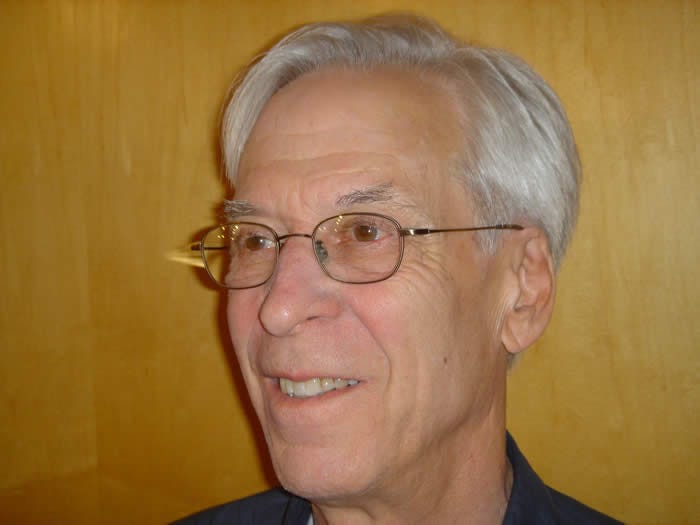
Dick hailed from Montclair, New Jersey, and received his BA from Dickinson College in 1955. Soon after graduating, he married Mae Elizabeth Johnson, a Dickinson College student of classical Greece and Rome. By then Dick had been commissioned as an officer in the United States Army, and after studying Japanese at the Army Language School in Presidio, California, he was sent to a post in Japan. Mae followed him to Japan soon after he arrived. While there, Mae taught Classics at the American School, and they both developed a life-long connection to Japan and its people. In particular, both were passionate about the theater, seeing productions of Kabuki and Noh, which would play roles in both of their scholarship. While in Japan, Dick became friends with J. Thomas Rimer, who later would become a noted scholar of Japanese literature and a colleague at Pittsburgh. Dick liked to tell the story that he was reprimanded by his superiors for spending so much time with Rimer, an enlisted man.
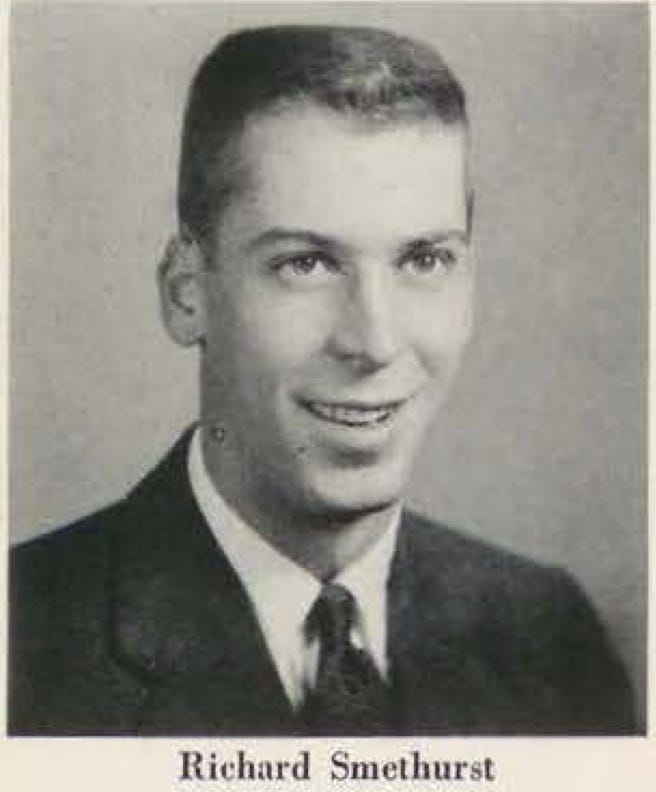
Smethurst received a Master’s in Japanese Studies from the University of Michigan in 1961, where he studied with James B. Crowley, and following that Dick and Mae returned to Japan for further language study. They then both returned to Michigan, where Dick received a PhD in History in 1968, where he studied under Roger F. Hackett, and Mae received a PhD in Classics that same year. In 1967, both were hired to teach at the University of Pittsburgh, Dick in the History Department and Mae in the Classics Department. Dick taught at Pittsburgh until 2013, including a stint as chair of the department from 1988 to 1994, and the couple lived in the Shadyside neighborhood. In the 1990s, he became a research associate in the Institute for Monetary and Economic Studies of the Bank of Japan and in the Business Faculty of Keio University.
Dick wrote three books:
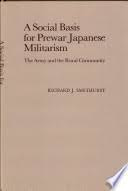
A Social Basis for Prewar Japanese Militarism: The Army and the Rural Community (University of California Press, 1974), based on his doctoral dissertation, is a study of the Imperial Military Reserve Association (帝国在郷軍事会) and other related organizations, examining the role that they played in rural villages and their promotion of army causes, using Yamanashi Prefecture as a sample case. He was probably influenced in his choice of subject by Hackett, his PhD advisor, who was a biographer of Yamagata Aritomo, a key figure in founding the Association.
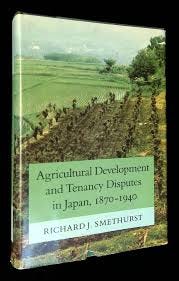
His second book was Agricultural Development and Tenancy Disputes in Japan, 1870-1940 (Princeton, 1986). While doing the research for his first book, he spoke to many former tenant farmers whose careers went back to the beginning of the century, and found that their memories of their pre-war experiences did not match the current scholarly orthodoxy, that the government drained the peasants through an exploitative land tax, forcing them more and more deeply into tenancy, debt, and poverty, eventually causing them to fall prey to the military and radical right. Through his conversations and subsequent research, he found, despite occasional setbacks, that there was a general increase in rural prosperity over these years, that the average peasant had “both a better standard of living and a greater sense that he could control his own life than most interpretations of rural society allow.”
Dick received fierce criticism about the book from critics, especially those wedded to a Marxist interpretation of history, resulting in one of the most heated debates in the field in that decade, in the pages of most of the major journals, in both Japanese and English. Dick’s side of the story can best be found in the essay, “A Challenge to Orthodoxy and Its Orthodox Critics: A Reply to Nishida Yoshiaki” (The Journal of Japanese Studies, Vol. 15, No. 2 (Summer, 1989), pp. 417-437).
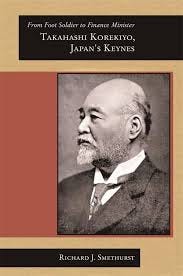
His final major book was Takahashi Korekiyo: Japan’s Keynes, From Foot Soldier to Finance Minister (Harvard University Asia Center, 2007). One of the critiques he had received for his last book was that he had underestimated the impact of the Showa depression on the countryside. To answer his critics, he embarked on a study of the Japanese economy of the early 1930s. While doing so, he became fascinated with the life of one of the key economic figures of that period, Takahashi Korekiyo, and decided to shift his focus to a biography of Takahashi. Dick did an excellent job creating an engaging mixture of intimate biographical detail and insightful analysis of the finances and bureaucracy of Japan during the long period that Takahashi served as a Bank of Japan official, finance minister (seven times), and, briefly, prime minister. Dick spent a substantial amount of time at Keio University in the years that he wrote this book.
Besides Dick’s work in the Pittsburgh History Department, he was also a key figure in the creation of the university’s vibrant East Asian Studies program, including an interdisciplinary master’s degree. I was an undergraduate and graduate student in history at Pittsburgh through much of the 1990s, and I found the various people in the East Asian program to be an extraordinarily collegial and effective group. Besides Dick and Mae, it included Evelyn Rawski (China history) and her husband Thomas Rawski (China economics), Ann Jannetta (Japan history), L. Keith Brown (anthropology), Keiko McDonald (Japanese film), and Tom Rimer (Japanese literature). They managed a robust number of graduate student grants, and with an excellent staff at the library, created an East Asian studies collection whose holdings rival that of more prominent institutions.
Mae published frequently on noh and kyogen, as well as Greek drama. She, Dick, and Tom regularly hosted Japanese noh and kyōgen troupes, as well as contemporary theater troupes, for performances and workshops at the University of Pittsburgh. Attending these performances are among my most cherished memories of my time in Pittsburgh.
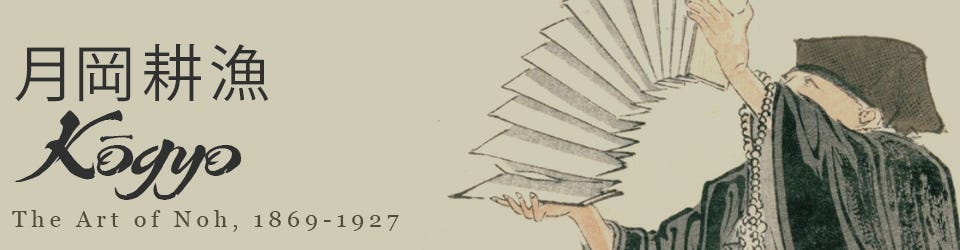
In later years, Dick was involved in a variety of online projects. One notable one was creating, together with Mae and a group of collaborators, Tsukioka Kōgyo, The Art of Noh, 1869-1927, a digital archive and study of a large collection ofJapanese color woodblock prints depicting the Noh theatre created by the artist Tsukioka Kōgyo, held at the University of Pittsburgh Library. Nyri A. Bakkalian, Dick’s last doctoral student, served on the team of the project, and wrote a beautiful memorial about him.
Dick was a generous and congenial advisor, who never complained about me choosing a topic he had little experience in (Japanese colonialism), always offering constructive advice and detailed editing suggestions. I wish I kept in better contact with him after I completed my dissertation. I spent most of my time in Fukuoka and the American West, while he spent his time away from Pittsburgh in New Jersey and Tokyo (he loved the Tokyo-based Tora-san movies), so our paths did not cross as much as I wish they had.
Dick was working on Japanese military history and the causes of World War II in his final years, I still use in my lectures many of his conclusions on the subject I learned when I served as his teaching assistant in a class on Pacific War. Some of his findings were published in the article “Planning for War: Elite Staff Officers in the Imperial Japanese Army and the Road to World War II” (The Asia-Pacific Journal, November 2020).
Mae passed away on December 15, 2019 at home, just short of their 63rd anniversary. I visited Dick at his home in March 2020, and keenly felt the depth of his sorrow of his loss. Dick continued to live in their home until earlier December 2023, when he moved into a rehabilitation ward.
A memorial service for Dick Smthurst will be held at 11:30am, June 17 at the Church of the Redeemer in the Squirrel Hill neighborhood of Pittsburgh (5700 Forbes Ave).